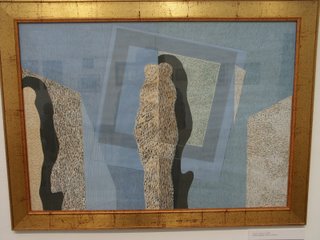
 Today was museum day yet again. We were attempting to visit three of them: The Ernst, which was previously scheduled, but was closed, the Banknote and Coin Exhibition, and the Hungarian Natural History Museum.
Meeting time was 11:00 am and Ron and I arrived on the minute. No one else showed up; even our American friend Angela, who said she would join us must have slept in. The Ernst Museum has ever-changing exhibits with no foundation exhibit. Each six weeks or so, they completely change what is on display. Ron and I last visited here in 2002 as a poster in the lobby reminded us. The display at that time was “Coffee Houses of Budapest”. It was so impressive as they had actual parts of famous, but no longer existing cafés set up and there was a little coffee counter to have a cup of java if the exhibit put you in the mood.
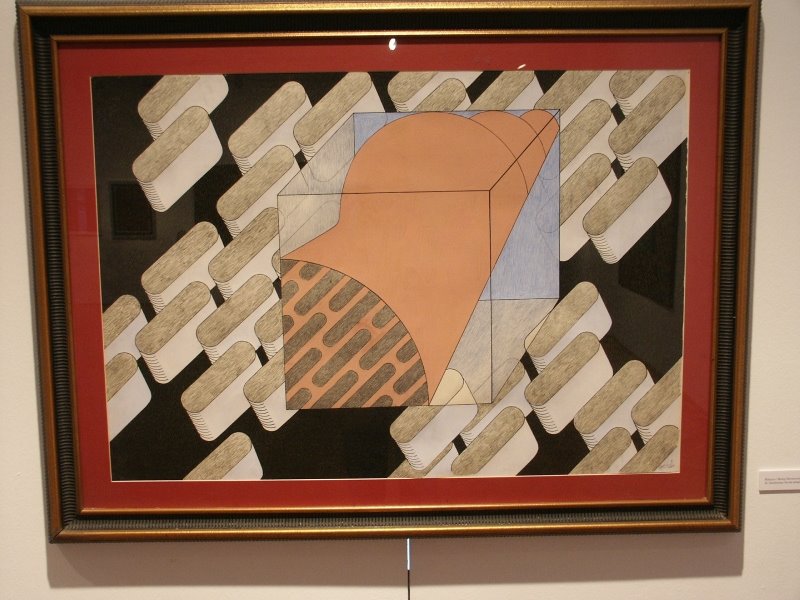
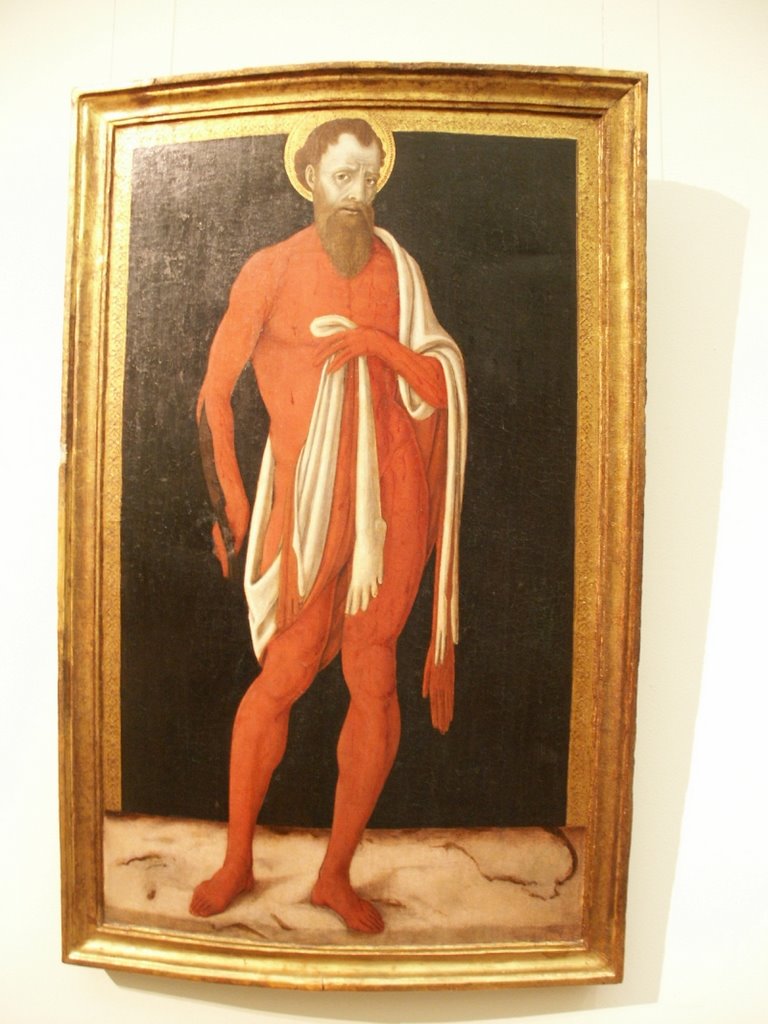
 Today, however, we were not as fortunate, in my opinion. The exhibit was “Pál Deim’s Retrospective” with the cost of entrance set at 500 Huf. It was not until I had covered the four large rooms that I discovered the handouts explaining who Deim is. The other discovery was that others were taking photos. I did not see a sign for a photo ticket, so I decided to take a few snaps until caught in the act. Neither of the two attendants said a word, so I continued. Most of the photos were just to have a visual to explain why I did not like the work, not that I wanted represenations for any other reason.
Diem is still alive and living in Szentendre. After searching through stacks of Hungarian handouts, I found the last one in English. Deim is currently 74 years old and is considered one of the classics of modern and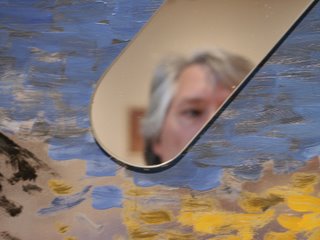 contemporary Hungarian art. His style is abstract and geometric shapes, creating an “Idol” (puppet) as the central theme of his work. I never learned to savor abstracts or geometric art, so most of this exhibit was wasted on me. The idea of the puppet was not explained further and seemed to be too metaphorically abstract for my thinking, so I let it go into the ethers for others to absorb. Ron has a degree in Philosophy and found much deeper meaning in many of the pieces than I ever would strive for. I did however, make it into one of his abstract paintings, a bit abstract myself.
The handout also states that Diem’s last Budapest exhibit was in 1992, also at the Ernst. It does not clarify why this is. We did notice that many of the pieces, large and small, paintings and sculptures were marked “Artist’s private collection”. This raises the question of whether or not he found a market for his work. The few pieces which were ‘on loan’ from other museums, were from the Szentendre Museum. Even fewer were in the hands of private collectors. Pál, do you have a day job to pay your way? Inquiring minds want to know.
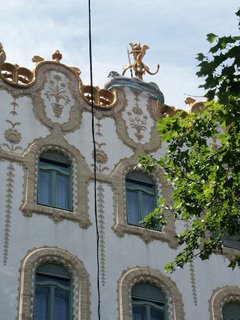 Stop 2 was the Banknote and Coin Exhibition located on
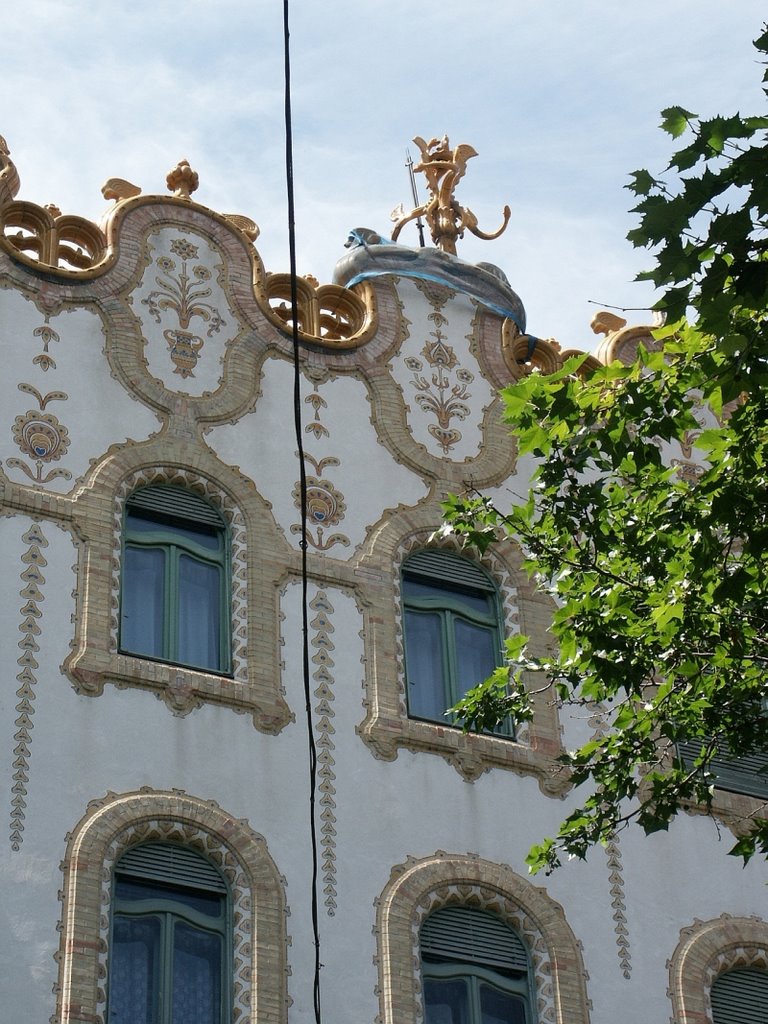
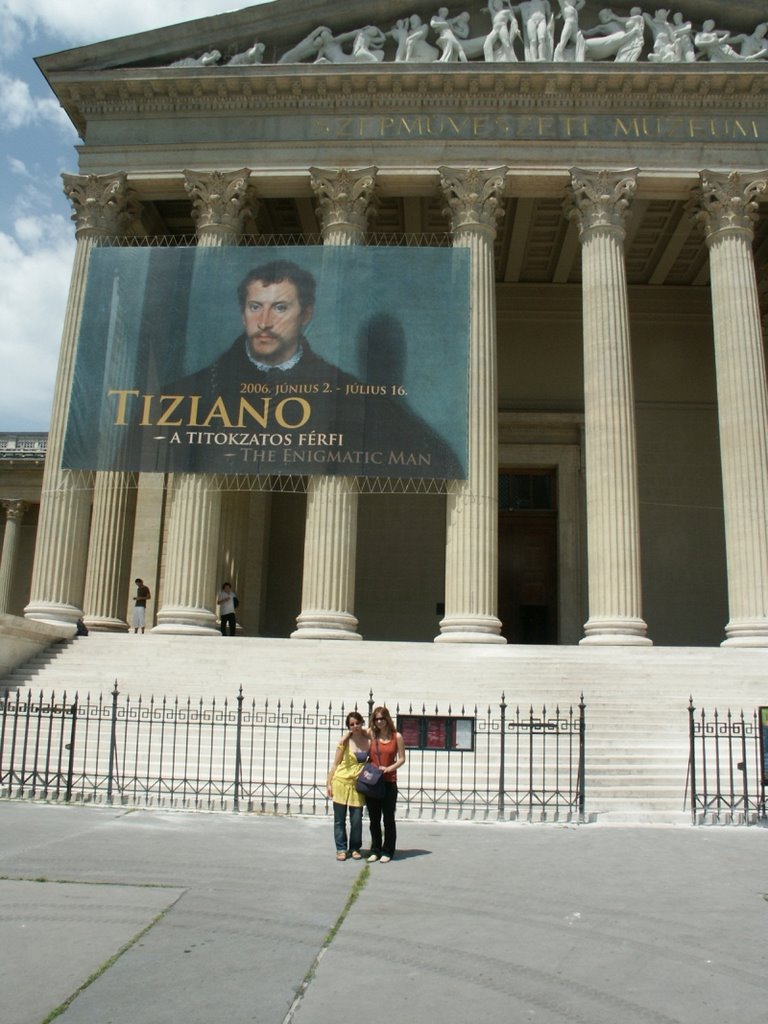
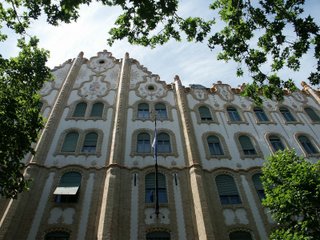 Szabadság tér 8, the same square that houses the US Embassy. We walked all around the square before we found number 8, but the building was closed, though the tour information states it is open every day. These photos are of a building around the corner that I have always loved and never had my camera handy when in that area. Alas, with the museum closed, we would just have to stop at the Farger’s café even earlier than expected. This café was not open either, a greater disappointment than the exhibition being closed. We went to the café in the middle of the square, which has surly servers in addition to overpriced drinks.
Ron needed to teach a private lesson, but since he still holds the title of Mr. Map, he was kind enough to accompany me to the Hungarian Natural History Museum. When we arrived at the square, the building looked old, worn down, and vacated. I was steadying myself for another strike out when we found the door was locked. The entrance was actually to the left in a new modern building. Once in the lobby, Ron took his leave and left me to my own wanderings. I was a bit horrified at the admission cover of 1,200 Huf. The ticket is lovely, but I could forgo this for a lesser price. This was one of the priciest museums and could be one of the reasons students did not show. Those over 65 do get in free with an ID.
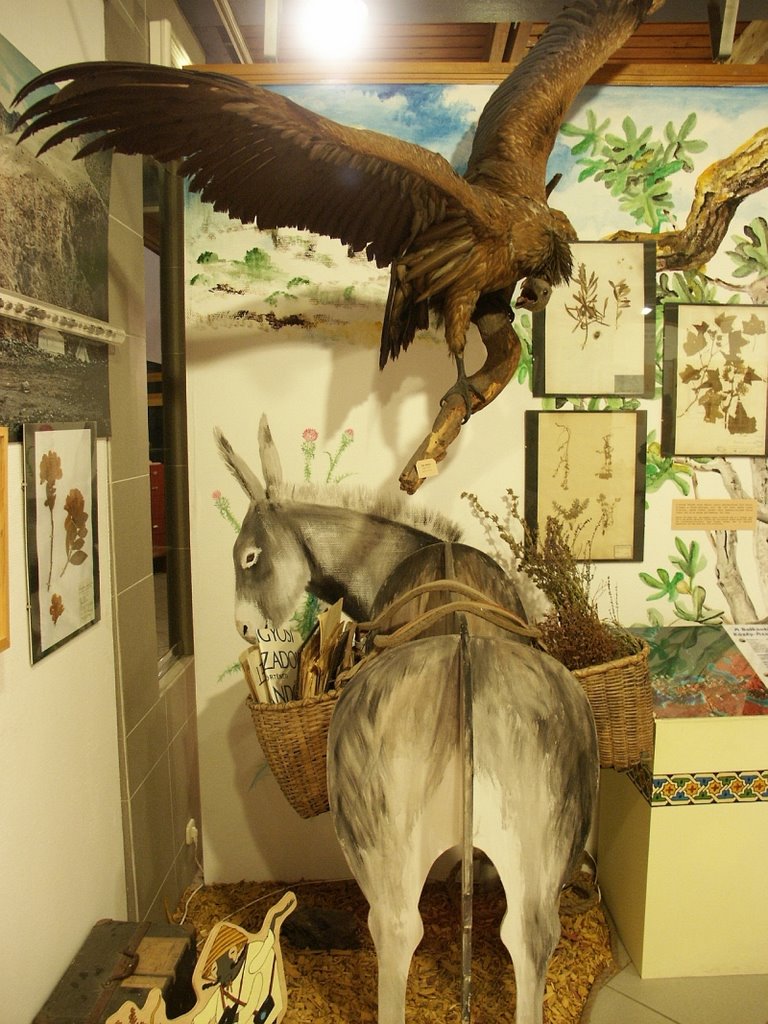
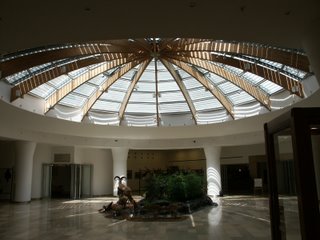 The building is new, clean, and modern. The first exhibit as you walk in was enough to send me flying out again. There were magnificent African animals stuffed and set around a pond. Other exhibits were more exquisite specimens, head and shoulders only, torsos missing. After seeing so many of these creatures alive in their natural environment in South Africa, it was devastating to see these specimans; the result of one man's need for sport killing.
The saving grace was the sign designating the coral reef, which caught my eye. Through a large passageway, they have created coral reef displays on the floor and covered it with thick glass. The sense of walking on water did not escape me. In some areas, there are large aquariums filled with colorful and spectacular live coral and other sea life.
I was lucky to have happened here today as they temporary exhibit was “The Mummies of Vác”. It seems that people were buried in their highly decorated coffins and placed in a burial vault in a church in Vác. At some point in time, the door to the vault was sealed over and forgotten. When it was rediscovered the temperature and humidity made perfect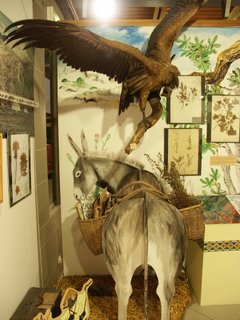 conditions for the dead to be mummified. Thus, there were mummy, not complete skeletons in the coffins. This dates back to the late 1700s. Most of my 2 ½ hour visit to the museum was spent here.
The rest of the museum was modern, bright, colorful, clever, educational, and entertaining, but with a definite focus for children. If one were traveling with children, this would be necessary to visit. For adults alone, unless the exhibit is still there, I would say it is avoidable unless you have a fervent interest in seeing stuffed animals. I am not sorry I went, but I most likely will not return any time in the future either.
Typical of these parts, though, I bought a ticket from the cahier. There were two people waiting to help visitors at the coat check area. Hardly busy in 80+ degree weather, yet there were two of them. Then the guard at the main entrance looked at my ticket sticking out of my shirt pocket. When I went to the mummy exhibit, there were two more people sitting at opposite sides of the entrance. The young man asked for my ticket. I said I did not know if I had a special ticket for this exhibit and handed him my entrance ticket. He said I did as he snipped the corner off of my ticket. So the question in my mind is if everyone gets a ticket that allows them into the special exhibit, why are there two people manning the door? Then on the second floor, I did not see one employee, other than the young woman sleeping on a chair in the hallway, but on the third floor, there were six like a gaggle of geese chattering away. Some things will never make sense to me.
![Reblog this post [with Zemanta]](http://img.zemanta.com/reblog_e.png?x-id=7c75de95-5158-4754-8ae2-1e6d84838794)
 We had some incredible guests leave today, Mark and Enid Sherman. Originally from NYC and still sounding enough like NY'ers to make me homesick it was exacerbated when we discussed the quality of bagels across the US. Mark is a retired psychologist, formerly both as a practitioner and educator. Enid runs a business with her daughter designing, manufacturing, and selling luggage tags and hair barrettes. You can see some examples here. The back has a hidden compartment for your name and address. As a travel writer, this is a great advantage as most experienced travelers know you do not want people at airports seeing your name and address, knowing your house may be ripe for the picking. Here are some examples of their offerings. Click on the picture to be redirected to their website, but not until you finish reading here.
  Mark surprised us with a leaving gift, a copy of one of his paintings. He had taken painting classes and later offered lessons himself. His specialty is lighthouse paintings as you can see here. We were also treated to his small gallery of paintings that he created while on their cruise here. Each painting was a stunning piece of art with extreme detail. With my lack of patience, these only assured me that if I were to take up painting, it would have to be the modern splash paint in large areas type. As OCD as I can be at times, it has to be with larger things, like categorizing my books by genre, author, and in alpha order by title. Mark picked up on this habit of mine. If you click on Mark's painting, you will be redirected to one of his web sites.






![Reblog this post [with Zemanta]](http://img.zemanta.com/reblog_e.png?x-id=db9e33b0-9035-469f-b45c-8a7ceb1a7da0)


 Posts
Posts


