This is not my idea on how to start a day, but our delightful guests chose to go to the House of Terror Museum the first thing this morning. Perhaps it is best to confront these issues early, by allowing the balance of the day’s events to cleanse one’s soul yet again.
This lovely Neo-Renaissance mansion that was built in 1880 was the home to two tragic organizations. The Arrow Cross, which was the Hungarian ultra-conservative party, occupied it from 1940, using it as their headquarters and prison. The Soviets continued the horrors here after their invasion and continued to use it for communist political police activities and prison. The basement contained a torture chamber. "The Public Foundation for the Research of Central and East European History and Society" purchased the building with the intention of creating a museum to remind people of the shocking events in these two eras of Hungarian history. That was in December 2000.
Since this time, there have been various demonstrations protesting the museum and its roof ledge sign, which has House of Terror in cut out letters overhanging the street. Many residents do not believe the events that took place here should be memorialized for the public and tourists to witness. Most of the protestors are family members of victims of those tortured here. Patricia is still questioning how beauty managed to survive and reemerge after all the dreadfulness that has taken place here. Don lamented upon leaving was that this left no hope for the morality of the human race. “People are capable of great barbarity; however, the lawns, parks, and people holding hands are contradictions that are too great to comprehend.” 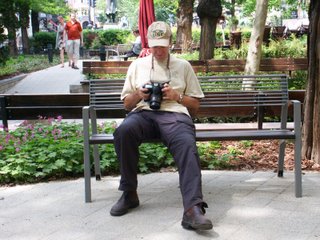
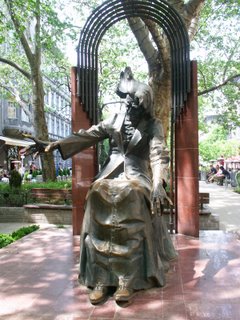
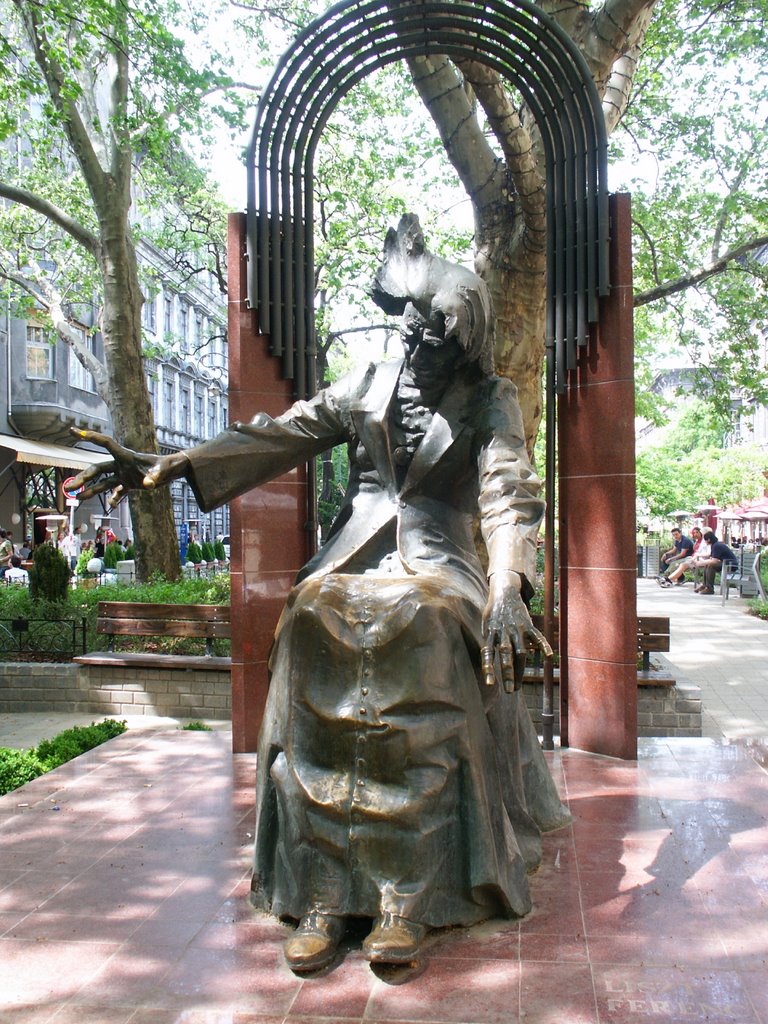
To renew the feelings of humanness, they went to City Park to find the Saturday flea market, but did not succeed. The green space, the people enjoying each other and their surroundings were enough. From here, they went to meet Ron at Liszt Ferenc ter where he directed them to another of our favorite eateries, 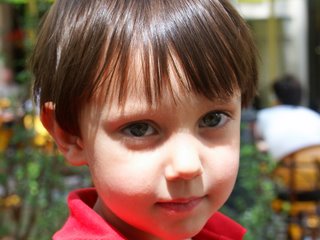
Falafel at Paulay Ede u. 53. This vegetarian salad bar has a fixed price for a small or large bowl where you serve yourself from the salad bar. Don and Patricia bought theirs to go, so when I met up with them, we took our goodies to the green space at Liszt Ferenc ter in a quasi-picnic. When I walked around taking pictures, there was a little boy who insisted I take his picture, so I did. His grandpa said he loved modeling for the camera.
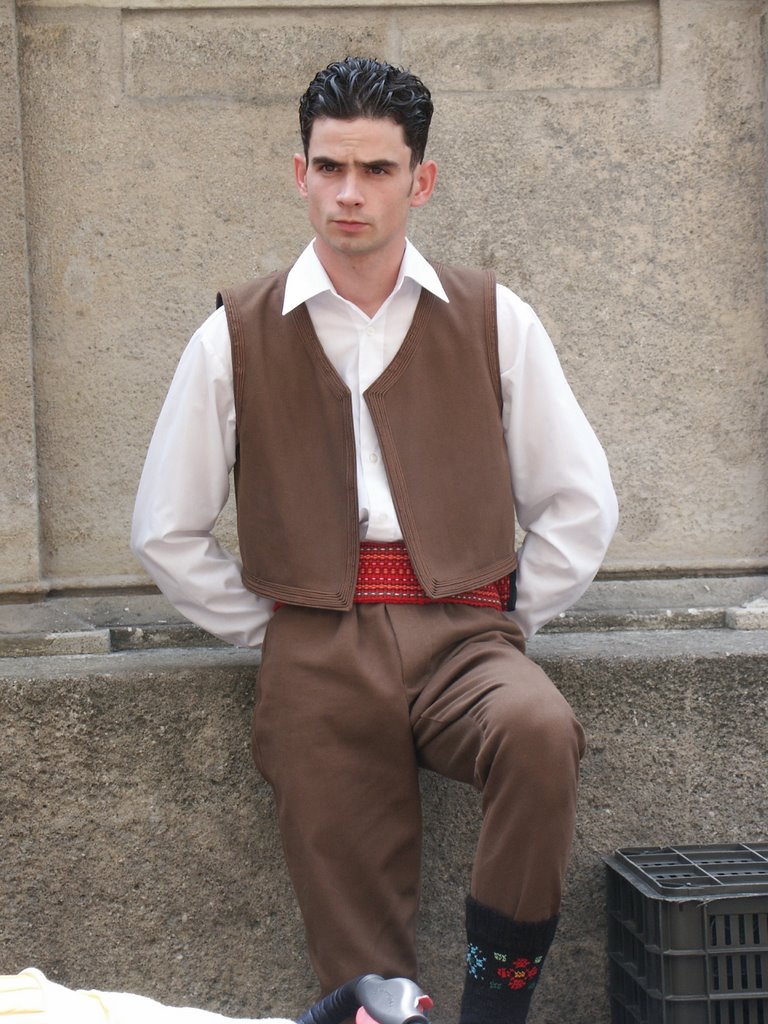
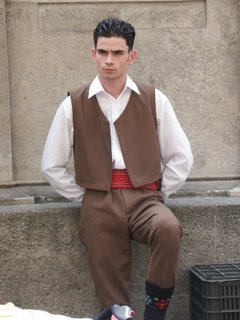 Fortunately for us, there was a district fair today, so on our way to the tram, we side-tracked there. There were booths selling crafts and food, while on stage, there was entertainment. The highlight was the young dancers performing folk dances. Patricia found some whimsical shirts for their children too.
With the tram out of service (until May 19th in one direction), we started in the direction of the tram bus replacement to Nygati train station, but first we stopped for tea at my favorite cafés, Bog’Art. Bog'art Café is at Terez korut 9. What I love about it is it being a combination café with an artists’ collective. One is always charmed by the selections of art as they embrace you while sipping your drink. There are more art pieces both upstairs and down, so be sure to see it all. No food is served, but the atmosphere is delightful. Patricia said this was her favorite of all cafés we had visited.
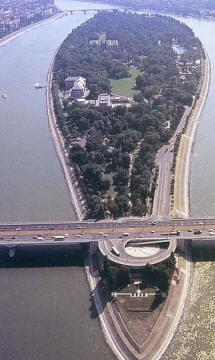
Making our way to Nygati, we took the 26 bus to the island. In the middle ages, cloisters 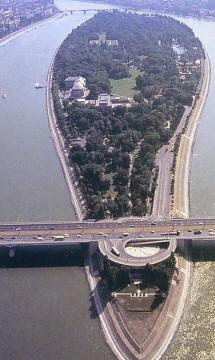 were built what was then called ‘Rabbits' Island’. The name was later changed in honor of St. Margaret. Margaret was a daughter of King Béla IV. She joined a nunnery on the island of which there are still ruins left in evidence. To reach the island you can take the Árpád Bridge from the north or Margaret Bridge from the south, each connecting Margaret Island with the city. The island is 2.5 km (1.4 miles) long, 500 meters (550 yards) wide, spreading out over 225 acres. In the early 19th century, royal families living in Buda transformed this island into a tremendous garden. Unlike other islands in large cities, this island has never been built over, but remains a great park in the city. Due to its healing springs, it housed a health resort that was built at the beginning of the 20th century.
All four of us were spiritually renewed by the greenery, the flowers, but most of all by the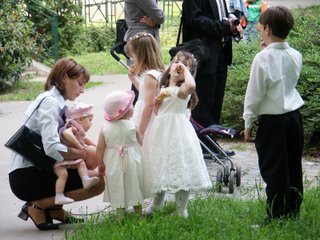 people enjoying their freedom. People all over the park were playing, sunbathing, reading, relaxing, and just being. Patricia, Ron and I chatted while sitting on the grass, while Don wandered taking fascinating photos of the people around us. We continued on for a beer at the hotel restaurant and then started back to the bus to come home. Don could not comprehend how at one time this island was victimized by war with tank tracks, yet now it was lush with harmonious happenings. The contradictions again are difficult to sort out.
As we were walking to the bus, we were approached by six maidens in t-shirts, five of which were marked with the word “Sale” and one with the word “Sold”. The lovely young woman who was claiming herself sold explained that this was her ‘Hen’ party and she had to sell parsley for blessing in her book. Minutes later, Ron realized why we had been singled out. One of her entourage was a former student of his from the university. So the bride-to-be gave us a small handmade book and asked each of us to write a blessing in it for her marriage to Péter, her intended. The delightful little book was cleverly decorated on each page with pictures and cartoons of matrimony and parenting. We each gave her our ‘blessing’ and received a small bouquet of parley as a thank you. The nuptial will take place next Saturday, so we will have to remember her. Dori and Péter, may you have a long and healthy life together.
The addendum to this is the obvious admiration that Ron’s former student had for him. She was so proud to tell him about her post-graduate position with the botany department of the Budapest Zoo. She gave him her professional business card and asked that he call her when visiting. From her demeanor, it was apparent that she held him in high esteem as her instructor, appreciating his warmth and caring.
On our way home, we detoured to one of our favorite restaurants for dinner, Szeraj Turkish Restaurant at the corner of Szent Istvan korut and Honved u. is a buffet style, inexpensive taste treat. We were lucky to snatch an outside table where we could chatter about the day and watch the world go by at the same time. Don made an interesting observation that this city is like a pack of cards that were taken apart and then put back together again just as they were with the city being rebuilt paving stone by paving stone, put back in its place.
Don wanted to experience a garden pub. Ron had hunted down an address for one on Kiraly. Some garden pubs are created by squatters. They find an empty courtyard of an used building and open a pub until they are evicted. The addresses change, but the tradition continues. The one we ventured to was not outdoors, but well off of the street down an alley. There were dozens of young people, drinking, talking, playing ping pong and other table games. The rules of the house are that you can sing or perform with the mike for 15 minutes at a time. We stayed long enough for Don to photograph the surroundings and then when home for our nightly ritual of halva and strawberries.
Patricia signed our guest book a couple of days before leaving us. She drew a little picture and placed it inside as well. Her entry:
Very dear Ron and Ryan,
I love our evening ritual (after the day of exploring Budapest) of eating fresh strawberries with halva and drinking tea.
(There is a picture here of three mugs, one tea cup and a plate with berries and halva.)
How will we return to normal working lives after these glorious days of Spring in Budapest?
Thank you for your warmth and care; for sharing your wonderful home; for taking us to the ballet, opera, holy mass, the island, Falafel feast, promenade, Govinda, Parliament, reading rooms, etc…
Thank you for your excellent friendship, which we treasure.
Best love, Patricia
The question in our minds, Ron and I, is how will we return to our normal lives after such a celebrated week that we have shared with such magnificent people?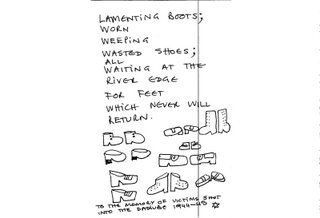 The lines in the picture are due to my scanner.
![Reblog this post [with Zemanta]](http://img.zemanta.com/reblog_e.png?x-id=45e8fca6-9192-4ee9-889f-eb9124bbd86f)
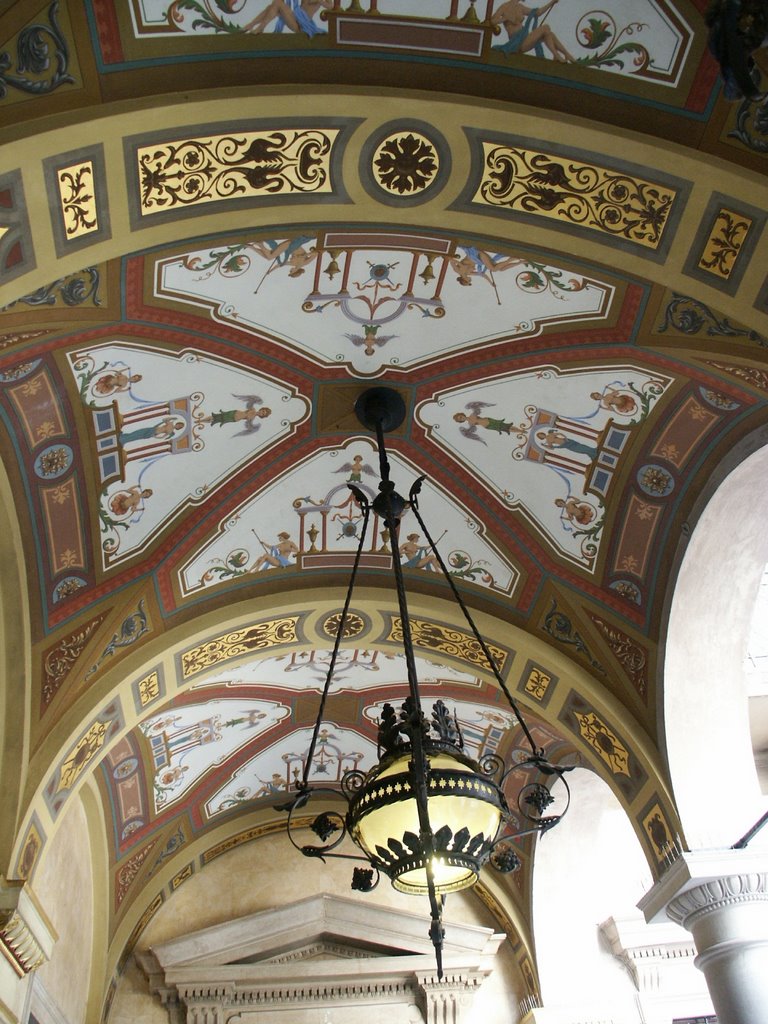
 I announced to students that today would start with the Postal Museum at Andrássy út 3, Metro: M1 Bajcsy-Zsilinksky út, Open: 10am-6pm Apr 1-Oct 31, 10am-4pm Nov 1-Mar 31 (closed Mondays).
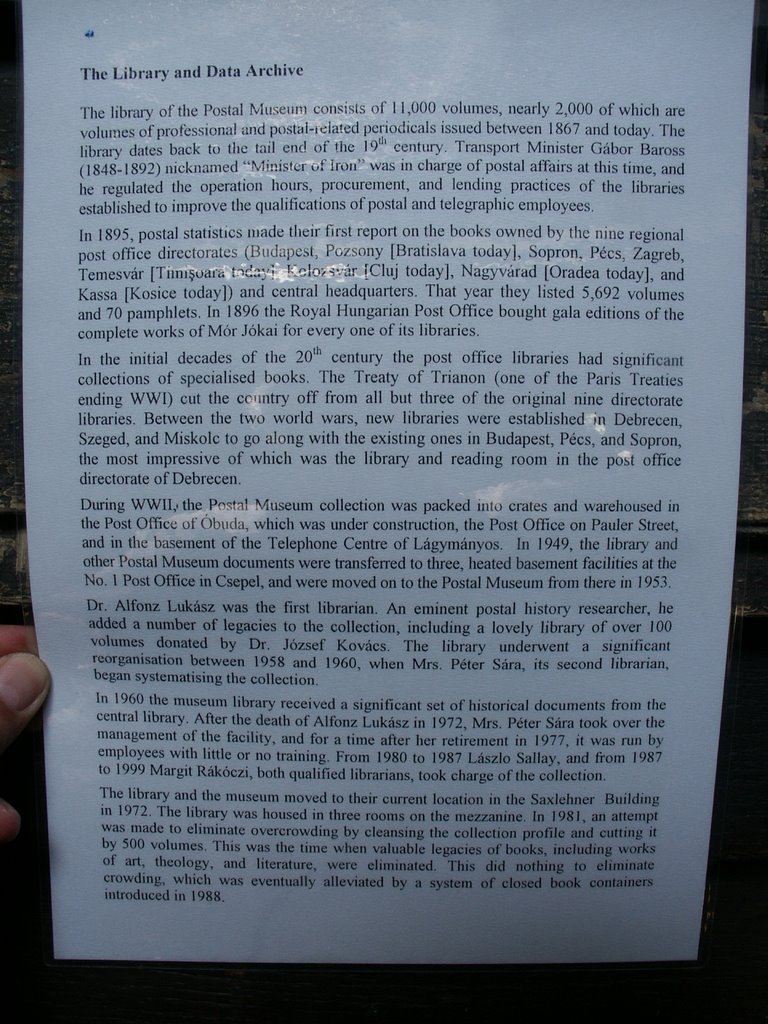 the best view from the balcony on the opposite side of the museum looking back. I have had many pleasant surprises in museums; some I expected to spend less than 30 minutes in and found myself leaving an hour or more later. This one was no exception. About ten minutes into my lurking around, one of my students showed up. She and I continued to browse the rooms and discuss the items on display. Everything was translated into English on laminated cards in each room. This was a shocker considering the size and cost of admission.
 said to my student, “Where is your father from?” My student explained that I was not her father, but that I was an American. The assistant was duly impressed with the time and care I spent looking at everything and
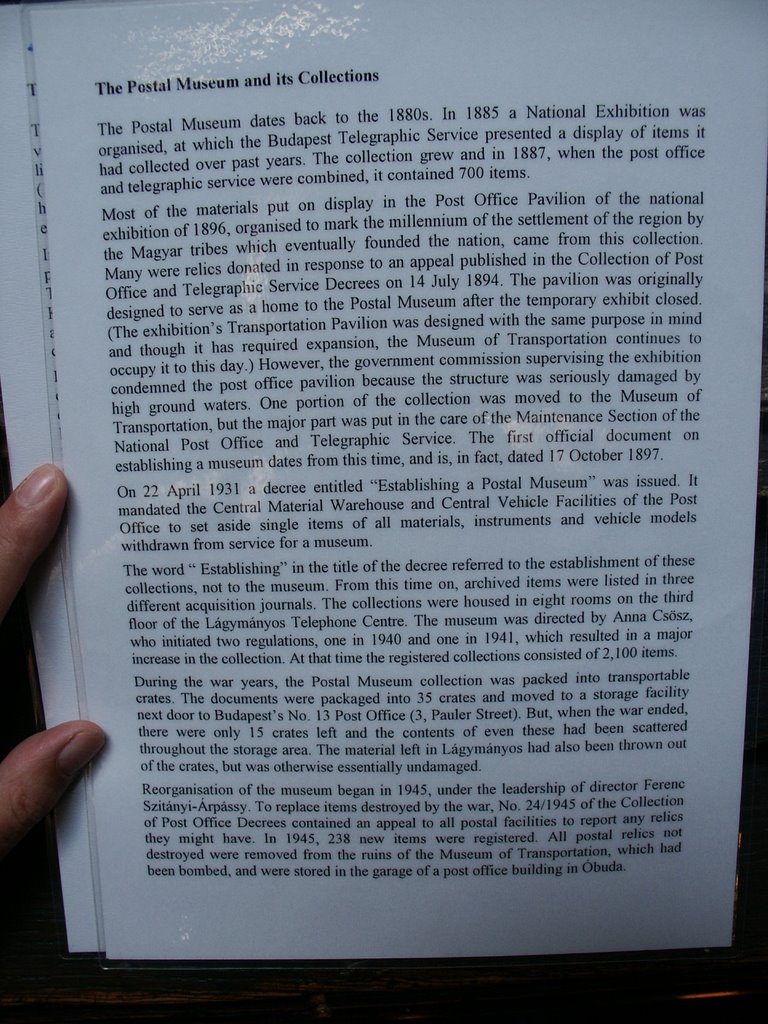 taking many photos. Sadly, during the entire time we were there, we were the only two visitors to a ratio of five employees. I highly recommend this museum, but if you are interested in stamps, there is yet another museum that specializes in them.
 pieces, almost everything was from Japan, which did not interest me in the least, but the students were fascinated.
![Reblog this post [with Zemanta]](http://img.zemanta.com/reblog_e.png?x-id=53f1c036-aca7-4a89-bc6c-374f7744dec2)





 Posts
Posts


